No going back
Tron: Ares, the third instalment in the Tron franchise, follows a highly sophisticated Program, Ares, who is sent from the digital world into the real world on a dangerous mission.
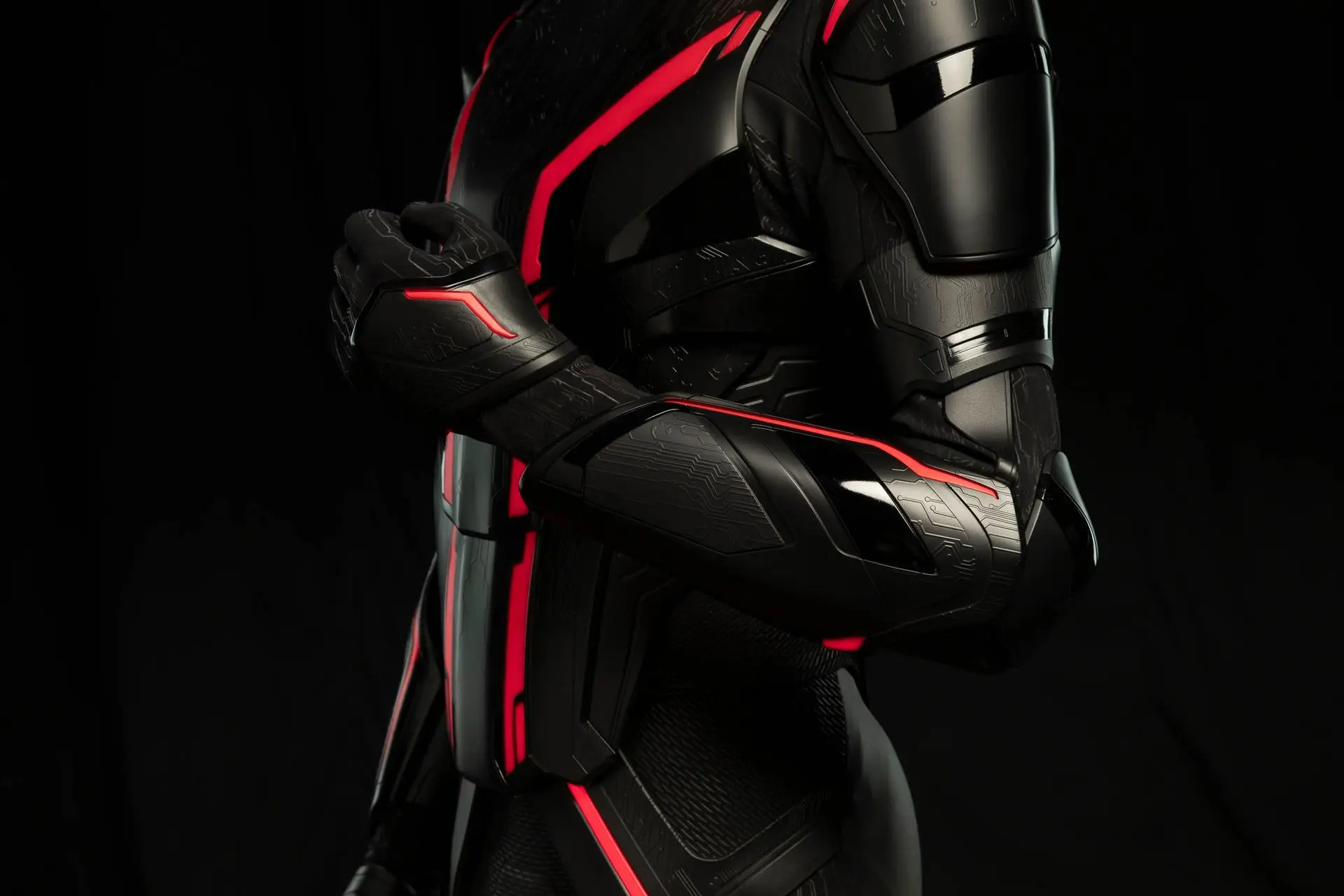
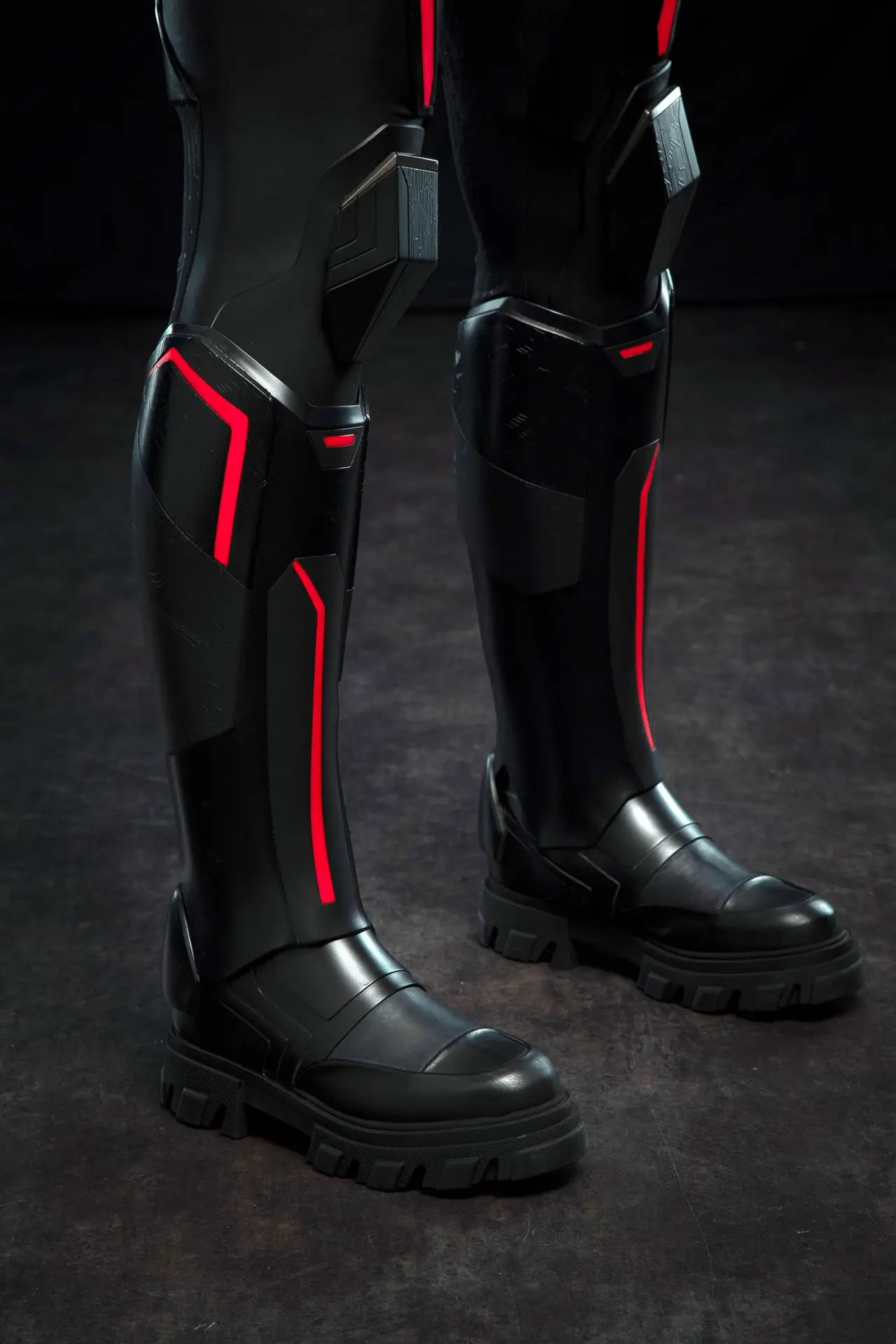
Working closely with costume designers Christine Bieselin Clark, Alix Friedberg and their teams, we translated their stunning designs into 62 fully functioning specialty light suits, numerous helmets and costume versions of Property Master Dean Eilertson’s iconic discs and batons. From the outset, it was clear that these would be among some of the most technically sophisticated suits we had ever fabricated. Each costume required a network of cables, concealed within the layers of fabric, that powered the integrated lighting embedded in the armour pieces.
Director
Joachim Rønning
Release
2025
Genre
Science fiction
No going back
Tron: Ares, the third instalment in the Tron franchise, follows a highly sophisticated Program, Ares, who is sent from the digital world into the real world on a dangerous mission.
Working closely with costume designers Christine Bieselin Clark, Alix Friedberg and their teams, we translated their stunning designs into 62 fully functioning specialty light suits, numerous helmets and costume versions of Property Master Dean Eilertson’s iconic discs and batons.
From the outset, it was clear that these would be among some of the most technically sophisticated suits we had ever fabricated. Each costume required a network of cables, concealed within the layers of fabric, that powered the integrated lighting embedded in the armour pieces.
Director
Joachim Rønning
Release
2025
Genre
Science fiction


Before discussing characters and their costumes, Tron: Ares Producer Jeffrey Silver tasked us with a crucial development phase for one of the film’s most important visual signatures: light.
“The lights are a key feature of the Tron light suits,” says Wētā Workshop Art Director Lans Hensen, “and working out how to make them was at the top of our challenges list when we started. How do you create super-bright, daylight-visible lights that can be stretched around the body and seamlessly embedded into a skintight costume? How do you make electrical components safe for the wearer during intense stunt action when things are likely to get broken and shorted-out, or when used in the pouring rain? How do you fit enough batteries to power the suits for 30 minutes, but allow a battery changeover in minutes? These were some of the challenges we started with. We explored multiple technologies and techniques seeking that balance of safety, performance and practicality.”
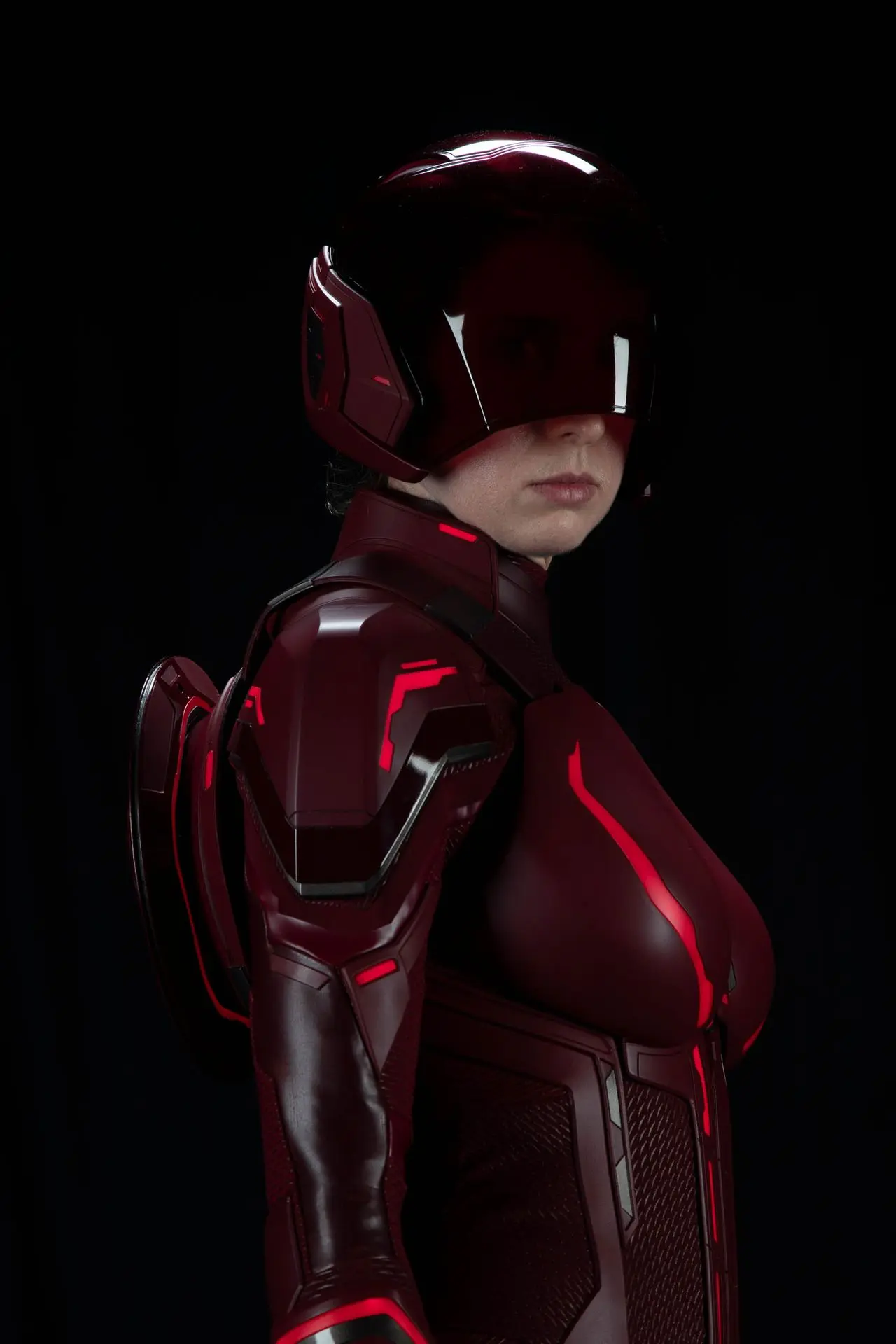
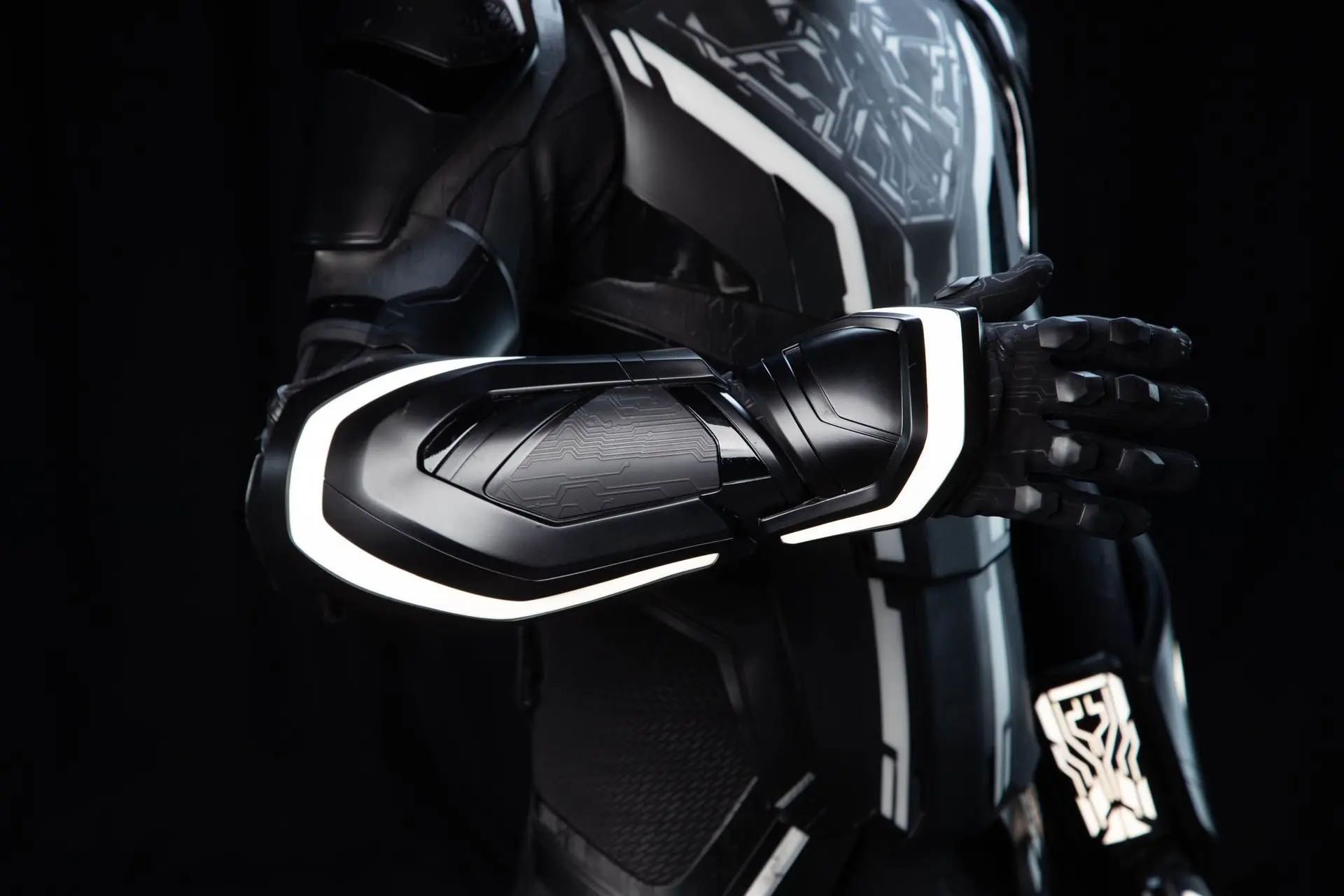
These challenges led us to create a flexible, low-voltage LED embedded into a custom tinted diffuser. Each suit incorporated up to five metres of LED strip, integrated into the armour pieces, and linked by a network of cables. These lights were then controlled using a wireless system to allow the brightness to be fine-tuned on set.
Of course, light needs power. To support shoot days, we built a quick-release battery hatch into the suits, just beneath the costume disc on the performer’s back. This allowed the team to swap batteries in minutes, a crucial timesaver on days where more than 20 suits were active and on standby.


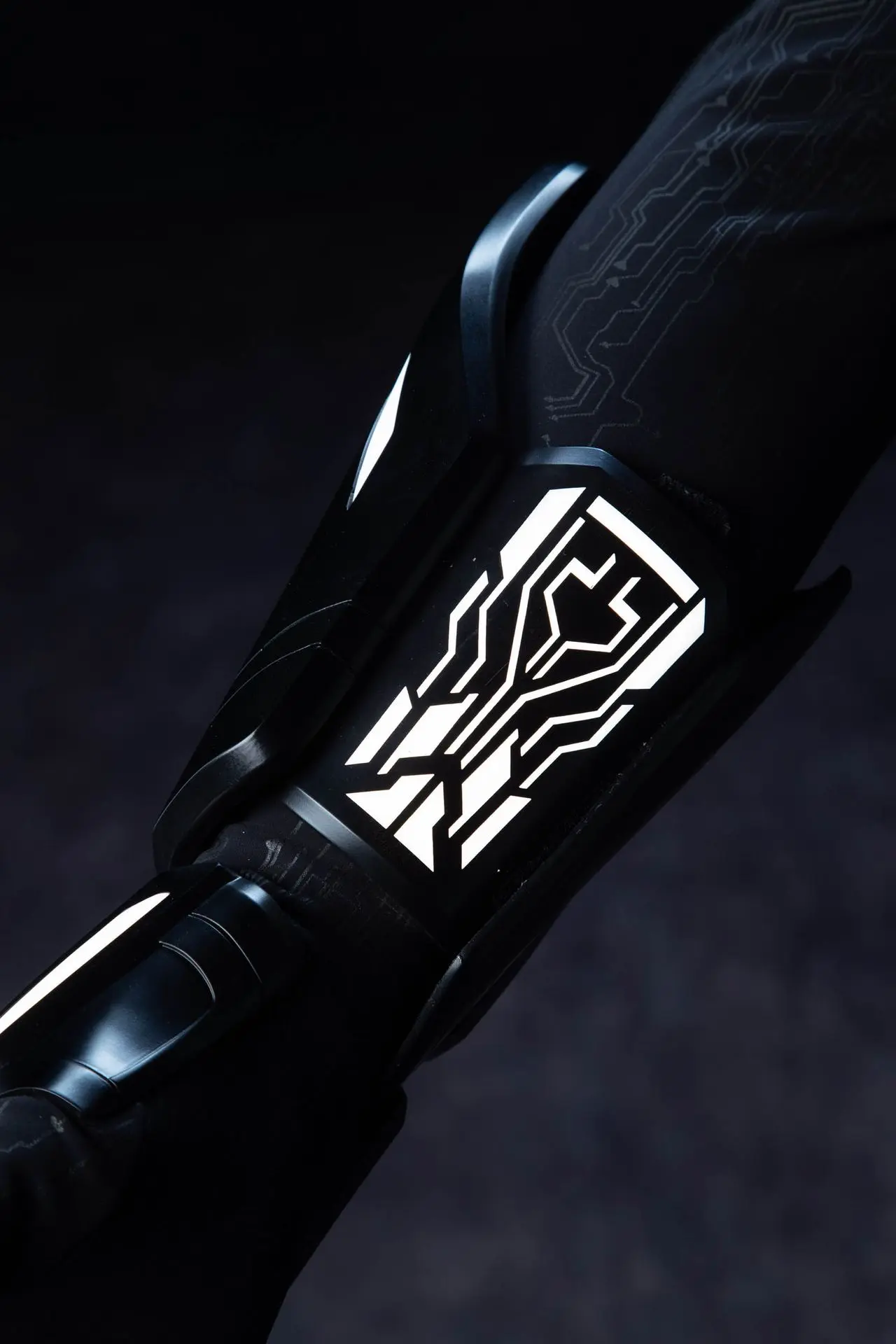
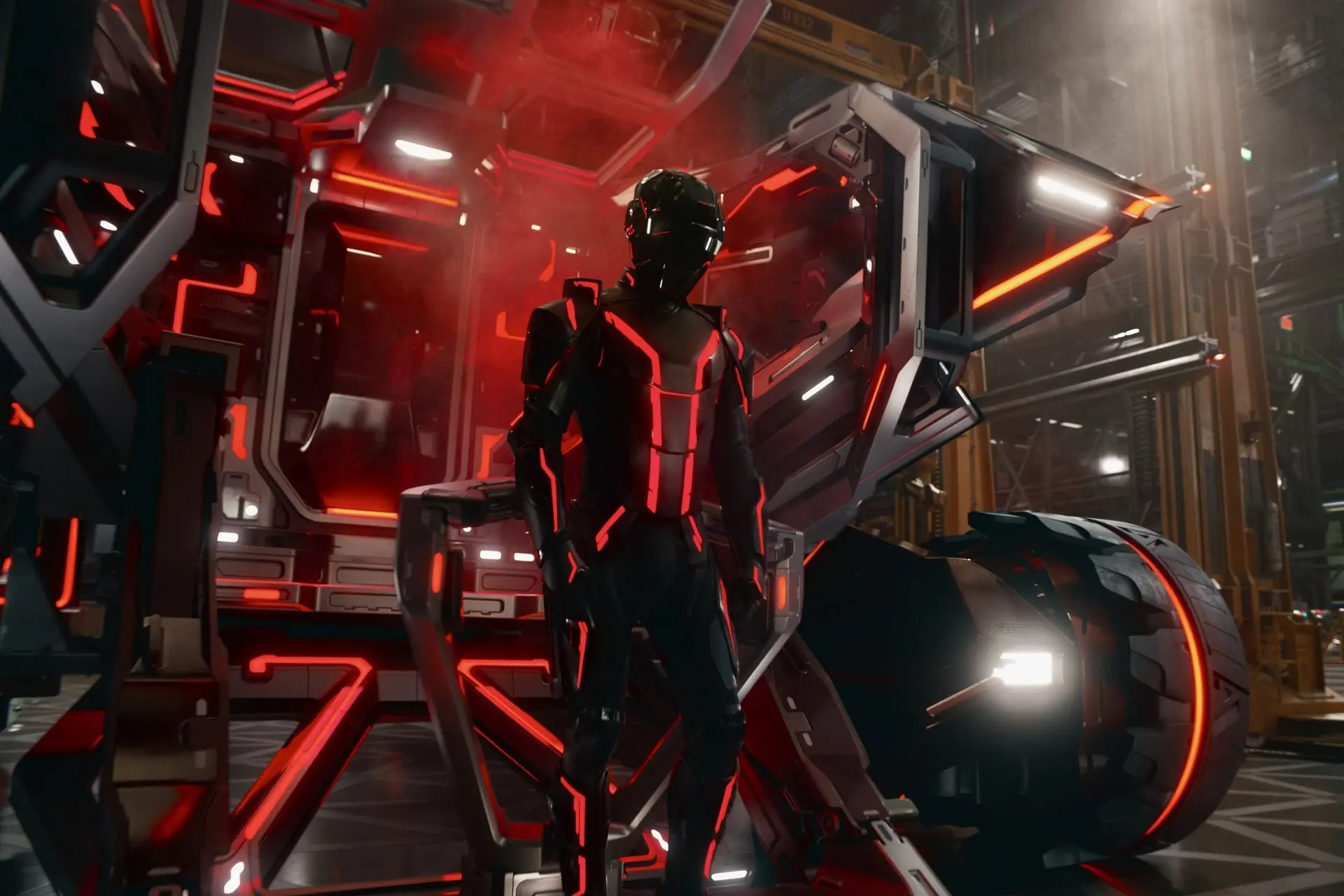
Among the many builds for the film, we were especially proud to fabricate Ares’ hero costumes. The first was black, form-fitting, with ominously red circuits. The second featured white circuits, sleek new gauntlets and a series of detailed, visually distinctive graphic elements that paid homage to the circuitry of the 1982 original.
The process spanned hemispheres. Costume designer Christine Clark and specialty costumiers Federico Cervantes and Sophia Coronado came to our workshop in Wellington, New Zealand where fabrication was undertaken, fittings were held in Paris and Los Angeles, and rigorous testing took place in Vancouver.
Ares, Athena, Athena’s Guards, the Red Guards, the Dillinger Soldiers and the Encom Soldiers may be lasered into existence and disintegrate after 29 minutes, but in our world of practical effects, their costumes were built to withstand the demands of both on and off the Grid action. The suits, one might say, needed to get with the program so they could perform in specific stunts (think chases on light cycles and fights with throwing discs) while being safe for the performers during this battle between worlds.
As longtime fans of this universe, it was an honour to go to the Grid for this electrifying new chapter from director Joachim Rønning.



Before discussing characters and their costumes, Tron: Ares Producer Jeffrey Silver tasked us with a crucial development phase for one of the film’s most important visual signatures: light.
“The lights are a key feature of the Tron light suits,” says Wētā Workshop Art Director Lans Hensen, “and working out how to make them was at the top of our challenges list when we started. How do you create super-bright, daylight-visible lights that can be stretched around the body and seamlessly embedded into a skintight costume? How do you make electrical components safe for the wearer during intense stunt action when things are likely to get broken and shorted-out, or when used in the pouring rain? How do you fit enough batteries to power the suits for 30 minutes, but allow a battery changeover in minutes? These were some of the challenges we started with. We explored multiple technologies and techniques seeking that balance of safety, performance and practicality.”
These challenges led us to create a flexible, low-voltage LED embedded into a custom tinted diffuser. Each suit incorporated up to five metres of LED strip, integrated into the armour pieces, and linked by a network of cables. These lights were then controlled using a wireless system to allow the brightness to be fine-tuned on set.
Of course, light needs power. To support shoot days, we built a quick-release battery hatch into the suits, just beneath the costume disc on the performer’s back. This allowed the team to swap batteries in minutes, a crucial timesaver on days where more than 20 suits were active and on standby.
Among the many builds for the film, we were especially proud to fabricate Ares’ hero costumes. The first was black, form-fitting, with ominously red circuits. The second featured white circuits, sleek new gauntlets and a series of detailed, visually distinctive graphic elements that paid homage to the circuitry of the 1982 original.
The process spanned hemispheres. Costume designer Christine Clark and specialty costumiers Federico Cervantes and Sophia Coronado came to our workshop in Wellington, New Zealand where fabrication was undertaken, fittings were held in Paris and Los Angeles, and rigorous testing took place in Vancouver.
Ares, Athena, Athena’s Guards, the Red Guards, the Dillinger Soldiers and the Encom Soldiers may be lasered into existence and disintegrate after 29 minutes, but in our world of practical effects, their costumes were built to withstand the demands of both on and off the Grid action. The suits, one might say, needed to get with the program so they could perform in specific stunts (think chases on light cycles and fights with throwing discs) while being safe for the performers during this battle between worlds.
As longtime fans of this universe, it was an honour to go to the Grid for this electrifying new chapter from director Joachim Rønning.


Related projects

Alien: Romulus
Film and television • Design • Manufacture • Creatures • Props • Weapons

Avatar: The Way of Water
Film and television • Design • Manufacture • Costumes • Creatures • Characters • Props • Weapons • Vehicles • Miniatures • World-building

Blade Runner 2049
Film and television • Design • Manufacture • Miniatures • World-building • Environments
Related projects
Blade Runner 2049
Film and television • Design • Manufacture
• Miniatures • World-building • Environments
Alien: Romulus
Film and television • Design • Manufacture • Creatures • Props • Weapons

Avatar: The Way of Water
Film and television • Design • Manufacture • Costumes • Creatures • Characters • Props • Weapons • Vehicles • Miniatures • World-building