Fata Morgana
Film and television • Games • Design • Vehicles • Armour • Props • Weapons • Characters • Creatures • Costumes • World-building • Environments • Cinematic keyframes • In-world graphics • Video games • Robots and automatons
Fata Morgana
Film and television • Games • Design • Vehicles • Armour • Props
• Weapons • Characters • Creatures
• Costumes • World-building
• Environments • Cinematic keyframes • In-world graphics • Video games • Robots and automatons
An ancient past. A distant future.
Between 2024 and 2025, our Design Studio developed an original IP as a showcase project — a way to share our world-building process, express our craft and offer deeper insight into how we bring stories to life. Fata Morgana (the Fate of Morgan) is a project that finds its inspiration in the Arthurian tales of destiny, and the legend of a certain sword locked in stone. But rather than retelling a myth of the past, this is a story of a time to come...
The year is 2145. After a devastating nuclear fallout, survival was all that mattered. Humanity’s entire network of infrastructure was lost or abandoned. Scientific knowledge, which had once given us the keys to the physical universe, was now both feared and revered as a magical force.
Somewhere in the rewilding countryside that was once Great Britain, history began to repeat itself. Those who could read the old texts learned of once-great kings and chivalrous knights who protected the realm. And so kingdoms emerged, and our heroes — King Arthur, Merlin and Morgan le Fey — were reborn.
An ancient past. A distant future.
Between 2024 and 2025, our Design Studio developed an original IP as a showcase project — a way to share our world-building process, express our craft and offer deeper insight into how we bring stories to life. Fata Morgana (the Fate of Morgan) is a project that finds its inspiration in the Arthurian tales of destiny, and the legend of a certain sword locked in stone. But rather than retelling a myth of the past, this is a story of a time to come...
The year is 2145. After a devastating nuclear fallout, survival was all that mattered. Humanity’s entire network of infrastructure was lost or abandoned. Scientific knowledge, which had once given us the keys to the physical universe, was now both feared and revered as a magical force.
Somewhere in the rewilding countryside that was once Great Britain, history began to repeat itself. Those who could read the old texts learned of once-great kings and chivalrous knights who protected the realm. And so kingdoms emerged, and our heroes — King Arthur, Merlin and Morgan le Fey — were reborn.
Environments
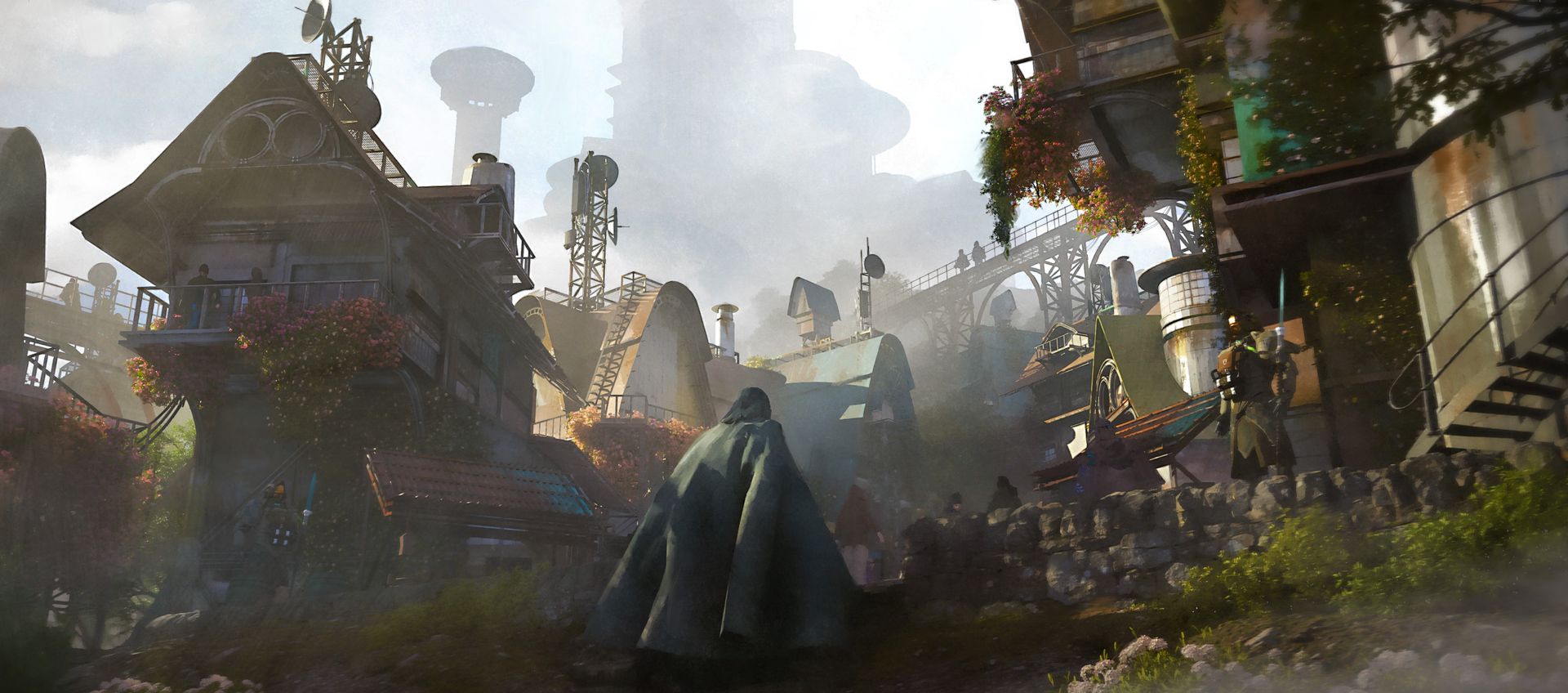
One of many kingdoms in Fata Morgana, the Realm of Tor is a fortified city shrouded in thick, eerie mist. At its heart stands Tintagel Castle, the city's grandest structure, rising imposingly above the gloom.
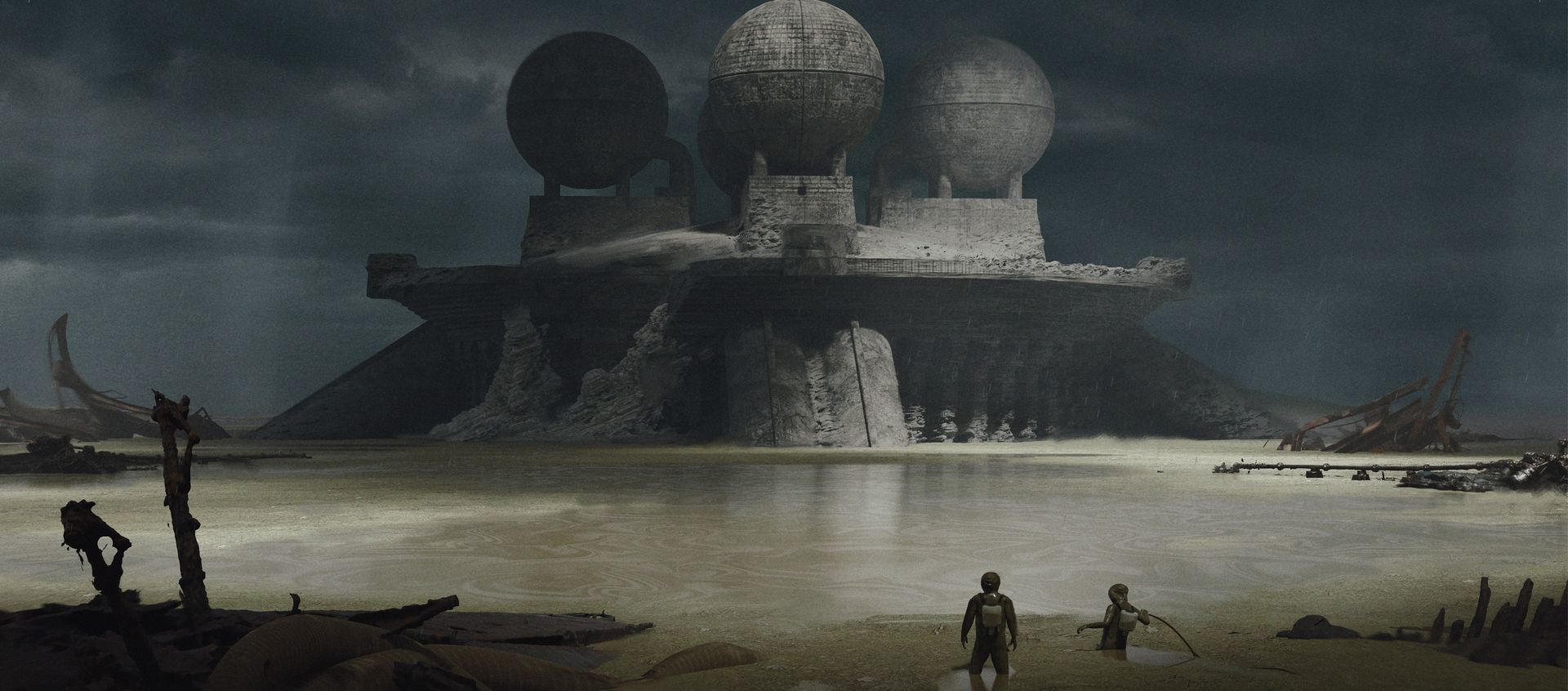
Beyond the kingdom stretches a desolate wasteland, strewn with relics of the Old World. Near a toxic lake lies a decaying research base, appearing at first to be an abandoned armament bunker. In truth, it once served as a maintenance and charging bay for a fleet of advanced military power suits — remnants of a long-forgotten war.
“The environment design of Fata Morgana was shaped by three key themes: Urban rewilding, medieval pastiche and a circular motif," says Art Director Vaughan Flanagan. "As the planet recovers from past devastation, rewilded urban ruins and abandoned structures now teem with lush greenery. Even newly built urban areas are vibrant and ornamental, offering a less bleak take on the post-apocalyptic genre.
"A nostalgia for the Middle Ages has inspired a revival of medieval-style architecture and culture. Buildings blend historical forms with modern materials like steel and iron, creating a deliberate pastiche.
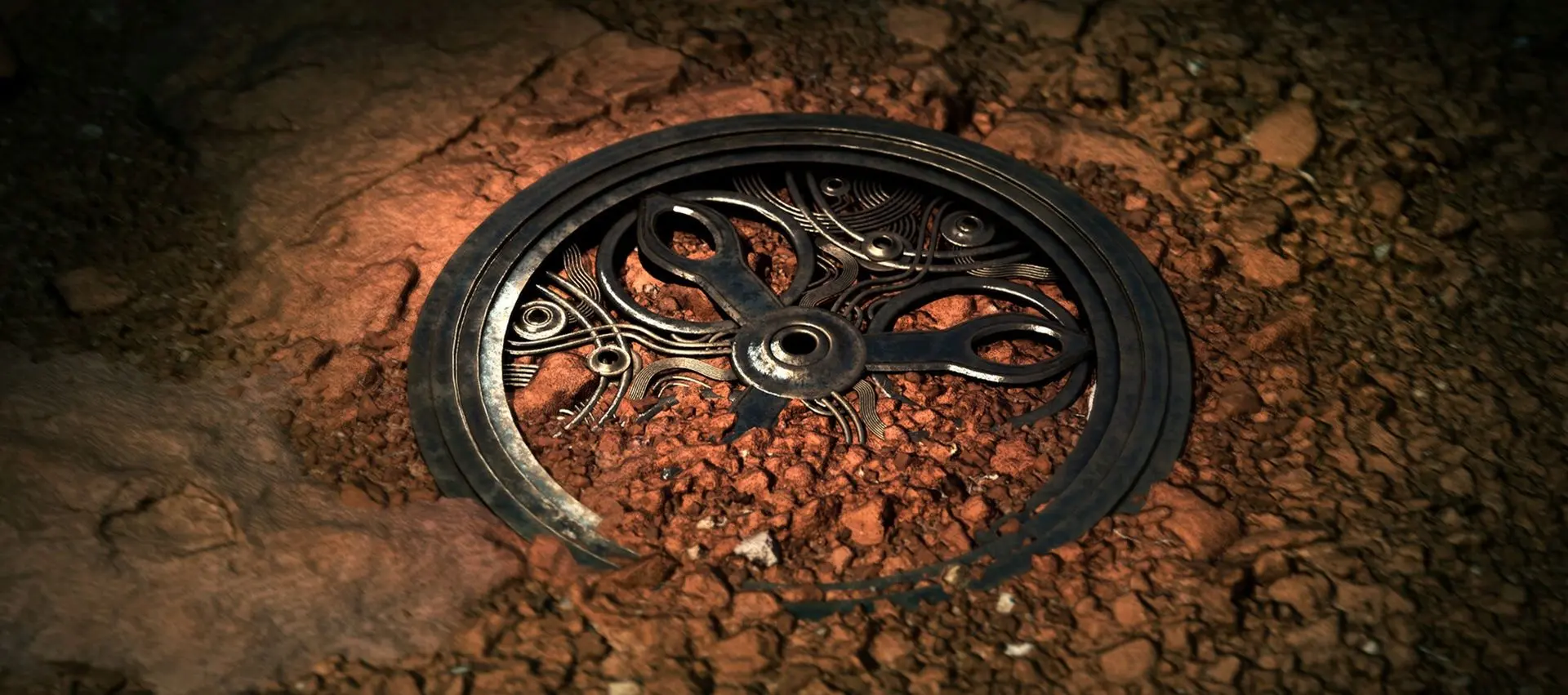
"The discovery of the 'round table' — a circular relic and ancient piece of technology — became a major visual influence, much like the impact of Tutankhamun’s tomb on the Art Deco movement in the 1920s. As a result, circular motifs appear throughout the design, from fine details to the overall layout of the fortified city.”
Environments
One of many kingdoms in Fata Morgana, the Realm of Tor is a fortified city shrouded in thick, eerie mist. At its heart stands Tintagel Castle, the city's grandest structure, rising imposingly above the gloom.
Beyond the kingdom stretches a desolate wasteland, strewn with relics of the Old World. Near a toxic lake lies a decaying research base, appearing at first to be an abandoned armament bunker. In truth, it once served as a maintenance and charging bay for a fleet of advanced military power suits — remnants of a long-forgotten war.
“The environment design of Fata Morgana was shaped by three key themes: Urban rewilding, medieval pastiche and a circular motif," says Art Director Vaughan Flanagan. "As the planet recovers from past devastation, rewilded urban ruins and abandoned structures now teem with lush greenery. Even newly built urban areas are vibrant and ornamental, offering a less bleak take on the post-apocalyptic genre.
"A nostalgia for the Middle Ages has inspired a revival of medieval-style architecture and culture. Buildings blend historical forms with modern materials like steel and iron, creating a deliberate pastiche.
"The discovery of the 'round table' — a circular relic and ancient piece of technology — became a major visual influence, much like the impact of Tutankhamun’s tomb on the Art Deco movement in the 1920s. As a result, circular motifs appear throughout the design, from fine details to the overall layout of the fortified city.”
Props
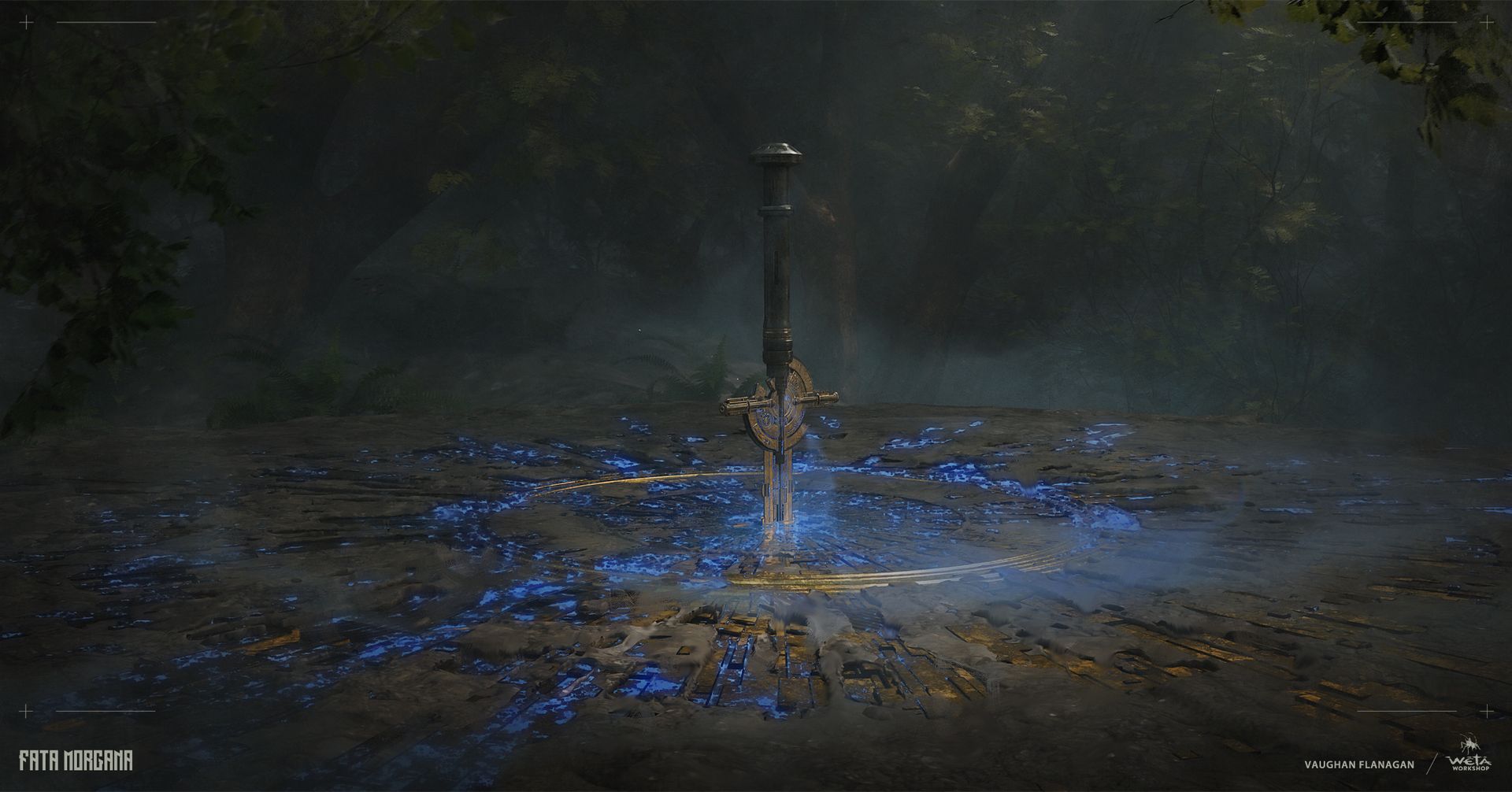
Excalibur is the kingdom of Tor’s most revered artefact, a symbol of the king’s divine right to rule. But the true nature and purpose of Excalibur is not fully understood until sorceress Morgan le Fey’s talisman is inserted into the crossguard.
In that moment, the sword is revealed to be the key that opens the gates of Avalon, a place ruled by the Fey — a dormant artificial intelligence — where it’s said humanity knows no suffering or death and can live forever.
"The design was shaped by Fata Morgana’s world — defined by decay, forgotten history, ancient myth and the blend of technology and magic," says Vaughan. "One of our goals was to create a distinctive IP by blending genres — ancient myth with futuristic technology, magic with science. The motif of ancient tech — machines so old that they’re beyond understanding, yet more advanced than anything now — guided details like fractured surfaces, runes and the blade’s unbalanced weight.
"The talisman, worn by Morgan, complements Excalibur. It shares the same fractured geometry and glowing seams — half machine, half ritual — and slots into the sword’s hilt, unlocking its deeper potential. Together, they’re not just artifacts; they’re fragments of a forgotten system.
"Creating a cohesive design language for Fata Morgana was key to making the world feel unified. Every element, from architecture to costumes and props, had to share a visual language — fractured, ancient, decorative and both familiar and strange — to reflect the world’s history.”
Props
Excalibur is the kingdom of Tor’s most revered artefact, a symbol of the king’s divine right to rule. But the true nature and purpose of Excalibur is not fully understood until sorceress Morgan le Fey’s talisman is inserted into the crossguard.
In that moment, the sword is revealed to be the key that opens the gates of Avalon, a place ruled by the Fey — a dormant artificial intelligence — where it’s said humanity knows no suffering or death and can live forever.
"The design was shaped by Fata Morgana’s world — defined by decay, forgotten history, ancient myth and the blend of technology and magic," says Vaughan. "One of our goals was to create a distinctive IP by blending genres — ancient myth with futuristic technology, magic with science. The motif of ancient tech — machines so old that they’re beyond understanding, yet more advanced than anything now — guided details like fractured surfaces, runes and the blade’s unbalanced weight.
"The talisman, worn by Morgan, complements Excalibur. It shares the same fractured geometry and glowing seams — half machine, half ritual — and slots into the sword’s hilt, unlocking its deeper potential. Together, they’re not just artifacts; they’re fragments of a forgotten system.
"Creating a cohesive design language for Fata Morgana was key to making the world feel unified. Every element, from architecture to costumes and props, had to share a visual language — fractured, ancient, decorative and both familiar and strange — to reflect the world’s history.”
Robots
In the world of Fata Morgana, combat takes its cues from medieval jousting. Passing patrols from rival houses put forward their best knights to engage in single combat out in the open wasteland. It’s fast — and it’s brutal.
“The primary weapon is a pneumatic spike that punches in and out like a jackhammer, and a typical secondary weapon would be a variable shield arm,” says Senior Concept Artist Adam Anderson. “The mounts use a kinetic electrical system where there is one main fuel tank and a second live discard tank. The latter fills with converted kinetic energy as the mech moves, building a charge that can be stored up for a specific power move. If the live tank reaches capacity without being used, an exhaust on top of the armour blows out an energy blast to release the pressure. When the tanks run dry, the knights dismount and resume combat with melee weapons until serious injury or yield.”
Power suits are driven by knights of the highest order, prized amongst nobility, passed down from father to son. The suit links to the user's mind and mimics their movements, amplifying strength and providing protection from the harsh environment.
The perilous hunt for chimera and other strange creatures leaves fewer and fewer power suits in circulation, and those with the knowledge to tinker and repair are also dwindling.
Robots
In the world of Fata Morgana, combat takes its cues from medieval jousting. Passing patrols from rival houses put forward their best knights to engage in single combat out in the open wasteland. It’s fast — and it’s brutal.
“The primary weapon is a pneumatic spike that punches in and out like a jackhammer, and a typical secondary weapon would be a variable shield arm,” says Senior Concept Artist Adam Anderson. “The mounts use a kinetic electrical system where there is one main fuel tank and a second live discard tank. The latter fills with converted kinetic energy as the mech moves, building a charge that can be stored up for a specific power move. If the live tank reaches capacity without being used, an exhaust on top of the armour blows out an energy blast to release the pressure. When the tanks run dry, the knights dismount and resume combat with melee weapons until serious injury or yield.”
Power suits are driven by knights of the highest order, prized amongst nobility, passed down from father to son. The suit links to the user's mind and mimics their movements, amplifying strength and providing protection from the harsh environment.
The perilous hunt for chimera and other strange creatures leaves fewer and fewer power suits in circulation, and those with the knowledge to tinker and repair are also dwindling.
Creatures
While the Earth slowly recovers from the devastation of nuclear war, there are still many perils to humans. The ecosystem is not what it once was.
Genetic mutants, known as chimera, roam the wastelands. Capable of airborne attacks and breathing a chemical that ignites into purple flames, these dragon-like creatures have become part of a rite of passage — to become a Knight of the Realm, a squire must defeat one in battle for their final test.
Creatures
While the Earth slowly recovers from the devastation of nuclear war, there are still many perils to humans. The ecosystem is not what it once was.
Genetic mutants, known as chimera, roam the wastelands. Capable of airborne attacks and breathing a chemical that ignites into purple flames, these dragon-like creatures have become part of a rite of passage — to become a Knight of the Realm, a squire must defeat one in battle for their final test.
Characters
In this vast kingdom, it is loyalty, deceit and courage that reign. Morgan le Fey, a young noblewoman with an uncommon gift. Merlin; once prophet, now hermit. Arthur, King of Tor. Guinivere; éminence grise, the power behind the thrown. Lancelot, Knight of the Realm. Nimue of the Lake.
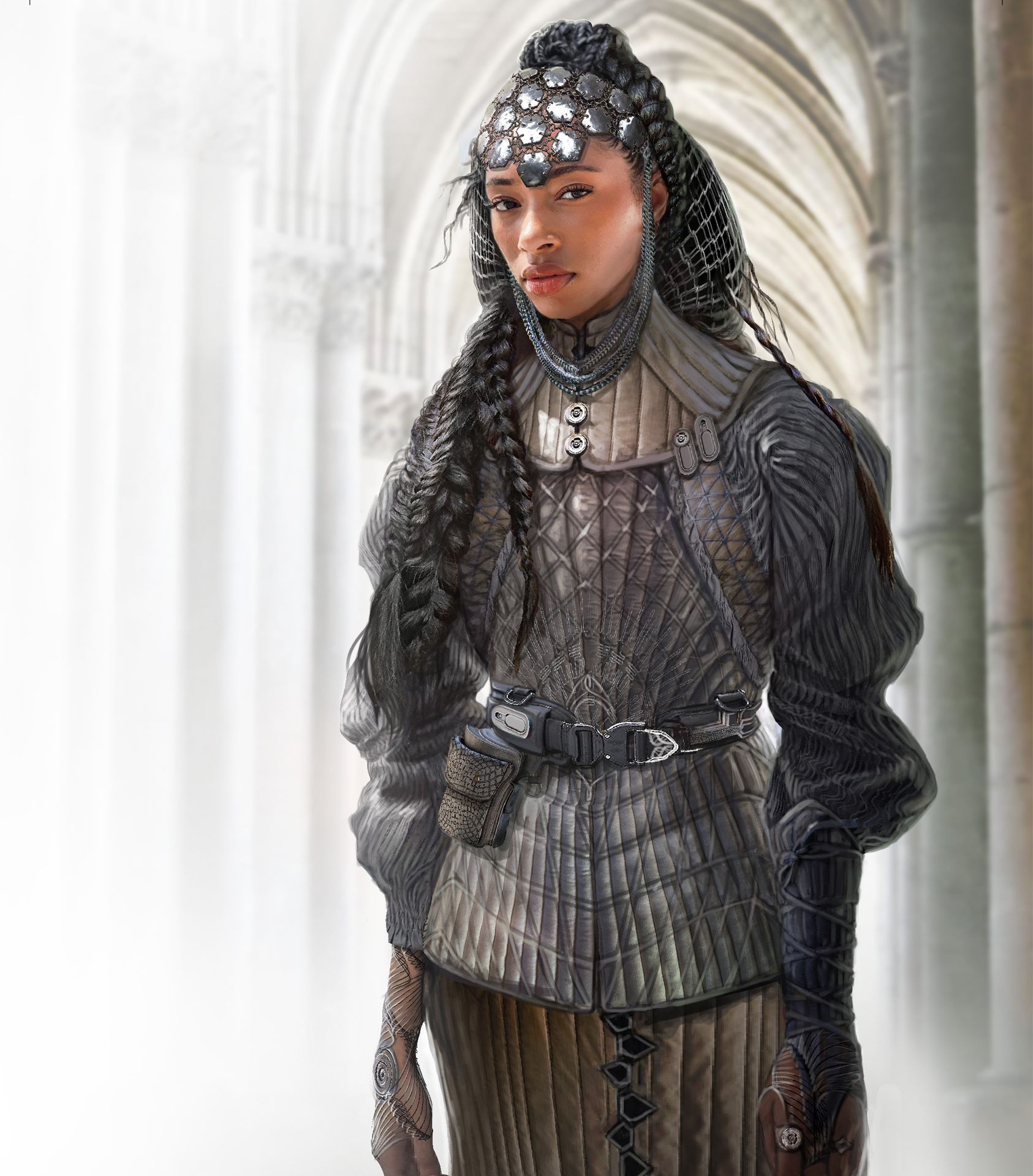
“The characters all needed to visually align with the legendary archetypes that they are based upon but also provide another glimpse into a world that is both highly futuristic and regressively feudal,” says Wētā Workshop Art Director Rebekah Tisch. “We liked the idea of playing with some romanticised medieval tropes but using different materials or hinting at futuristic manufacturing techniques. As with the city and various props, we tried to integrate shape language that supports the broader narrative about the real uses of the now-ancient technology that the culture is built on.”
Characters
In this vast kingdom, it is loyalty, deceit and courage that reign. Morgan le Fey, a young noblewoman with an uncommon gift. Merlin; once prophet, now hermit. Arthur, King of Tor. Guinivere; éminence grise, the power behind the thrown. Lancelot, Knight of the Realm. Nimue of the Lake.
“The characters all needed to visually align with the legendary archetypes that they are based upon but also provide another glimpse into a world that is both highly futuristic and regressively feudal,” says Wētā Workshop Art Director Rebekah Tisch. “We liked the idea of playing with some romanticised medieval tropes but using different materials or hinting at futuristic manufacturing techniques. As with the city and various props, we tried to integrate shape language that supports the broader narrative about the real uses of the now-ancient technology that the culture is built on.”
Morgan le Fey
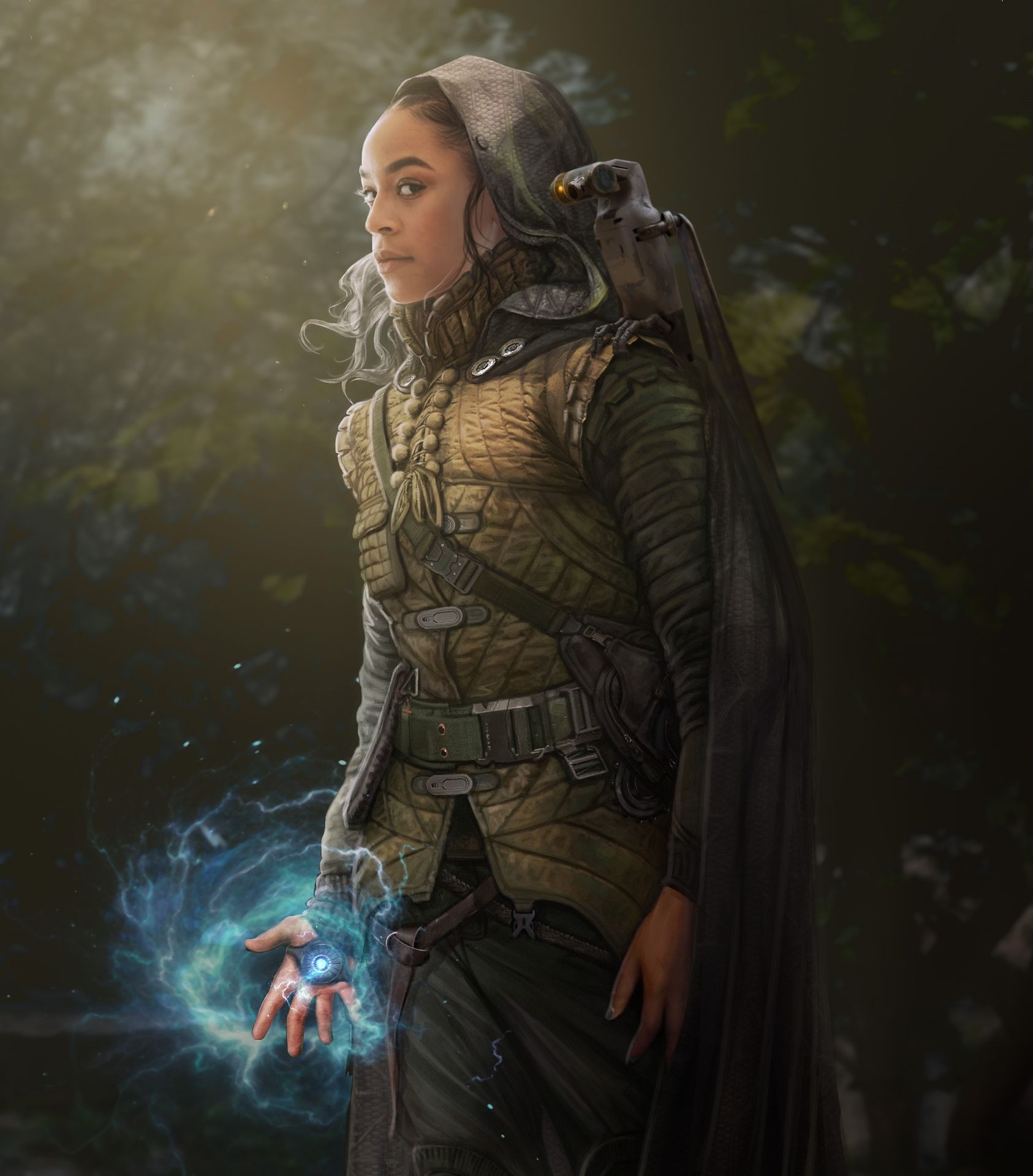
Morgan is a young noblewoman with an uncommon gift: she understands the ancient technology that was once prevalent on Earth, and she can bring it back to life. But only mages, highly trained and appointed by the court, are permitted to wield artefacts that use the ‘life power’ — what we know as electricity.
As a child, Morgan is sent away to a convent by her mother, the queen consort. It is there that she meets the greatest mage, Merlin, and secretly becomes his dedicated student — eventually surpassing her master.
But Morgan’s fate would catch up with her. Upon the coronation of King Arthur (her half-brother), she is required to assume an official court role, lady-in-waiting to Queen Guinevere.
Merlin
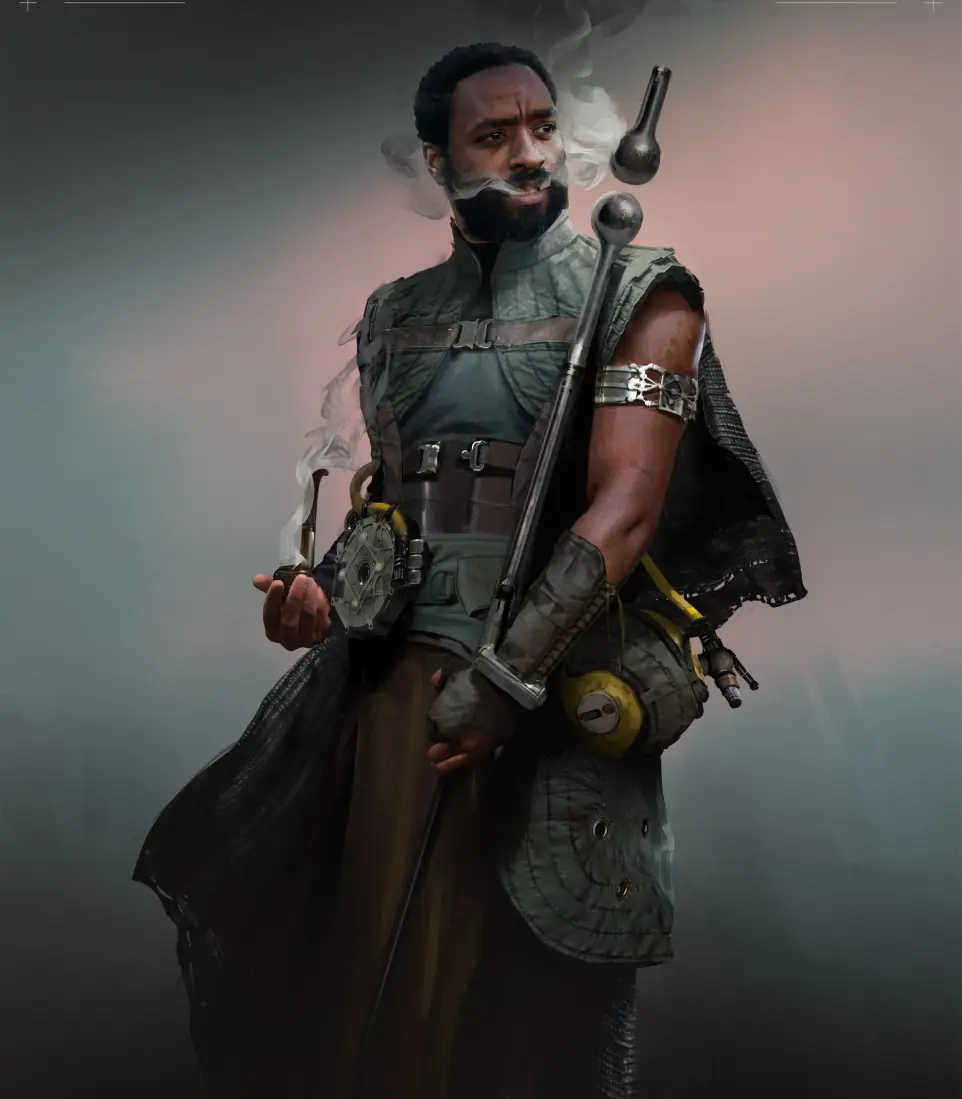
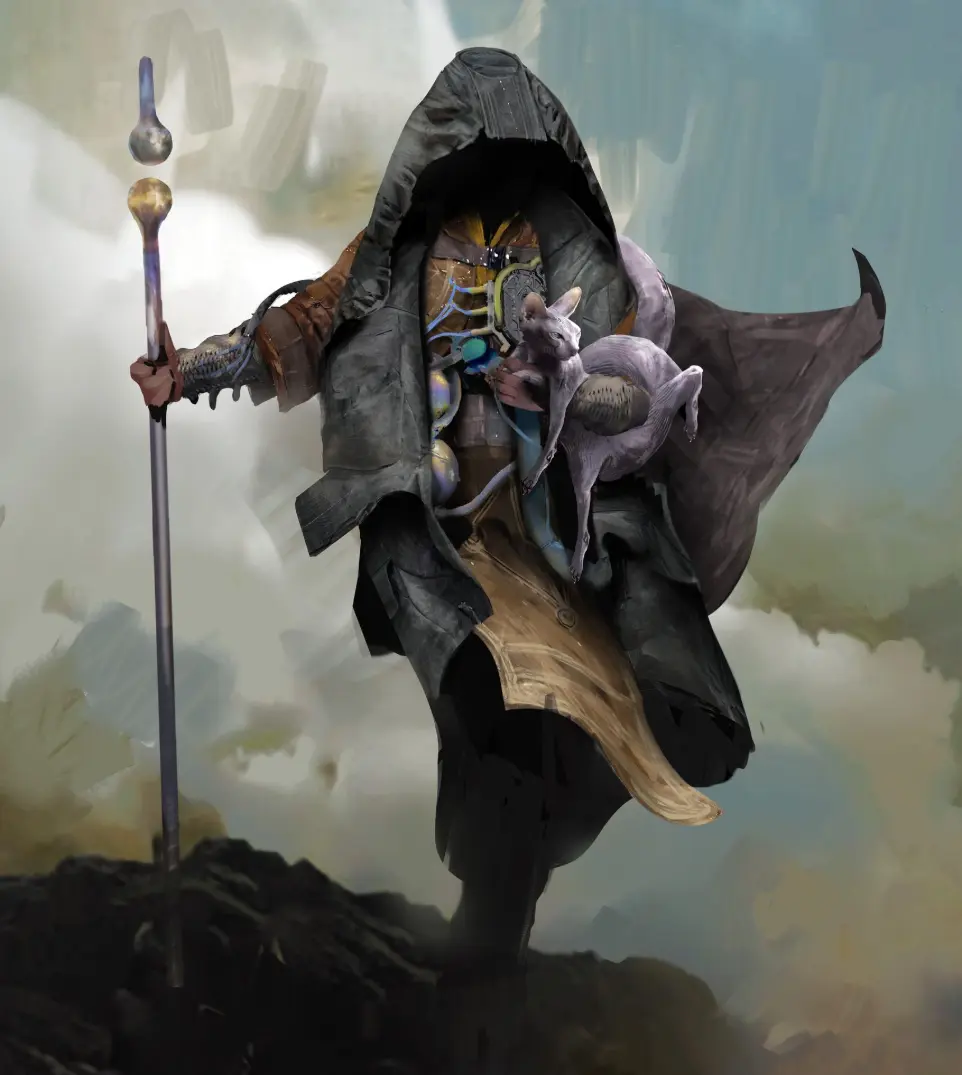
Merlin is the greatest of all mages. Once the Lord Protector of the Realm, Merlin has now reclused himself from royal affairs to seek the true power of the Fey (a dormant artificial intelligence) — a life power so great that it could resurrect the ancients. An old foretelling speaks of an emissary that will open the gateway to Avalon, a place ruled by the Fey where humanity knows no suffering or death and can live forever in peace.
Merlin is a charismatic man who is highly persuasive and socially adept, though feels little empathy. He grew up during a turbulent time of plague and famine in the kingdom.
Most believe that the Fey have chosen Merlin to be their envoy, but upon meeting Morgan he begrudgingly discovers that this is not his prophesy to fulfil.
Arthur, King of Tor
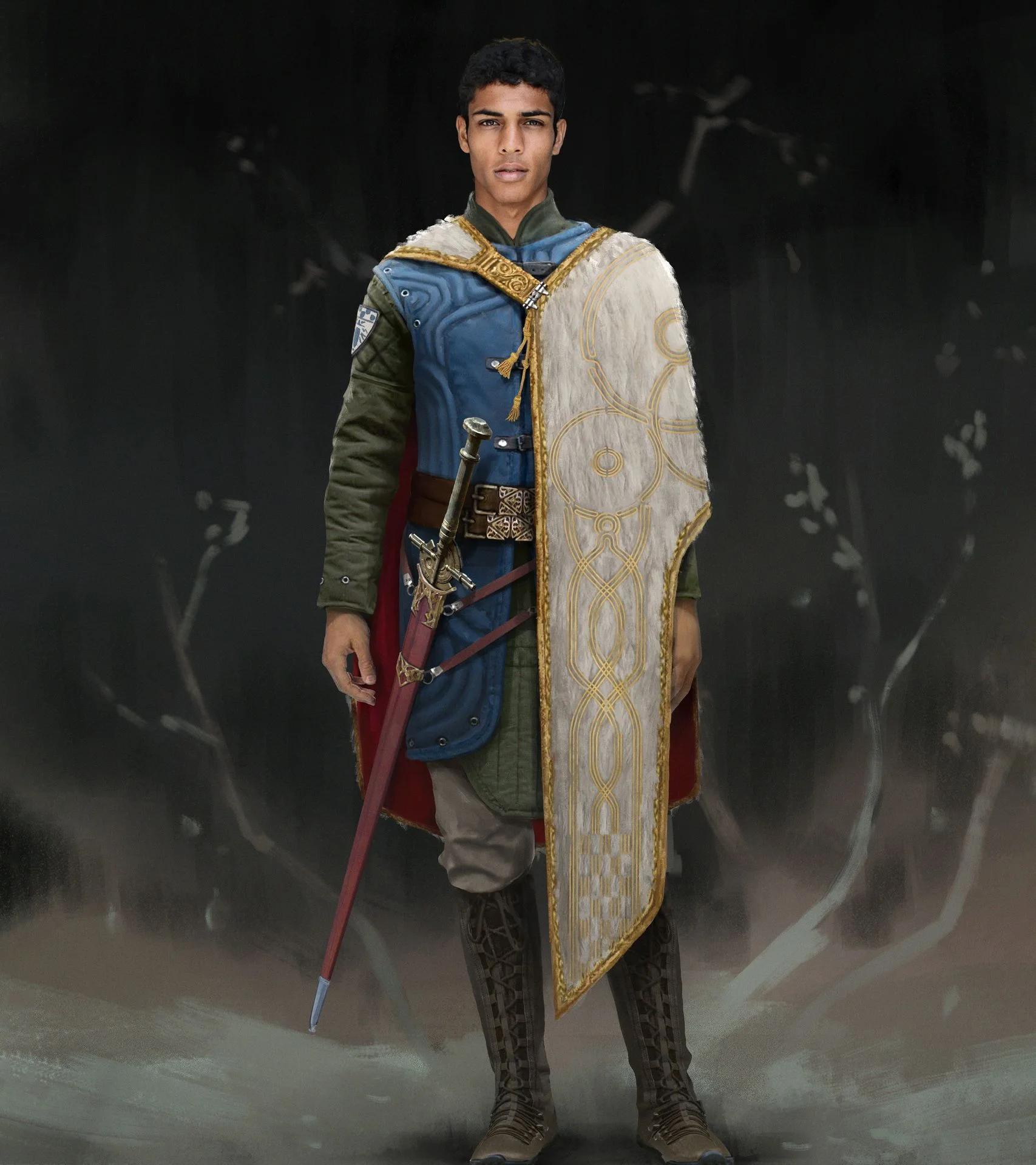
Arthur has been primed for the throne from the day he was born. He excels in the physical arts: riding, swordplay and jousting. He values friendship, loyalty and fairness. His closest confidante is Lancelot. Growing up with his half-sister, Morgan, whose inclination for magery was always admonished, Arthur developed a deep mistrust and fear of the power.
Queen Guinivere
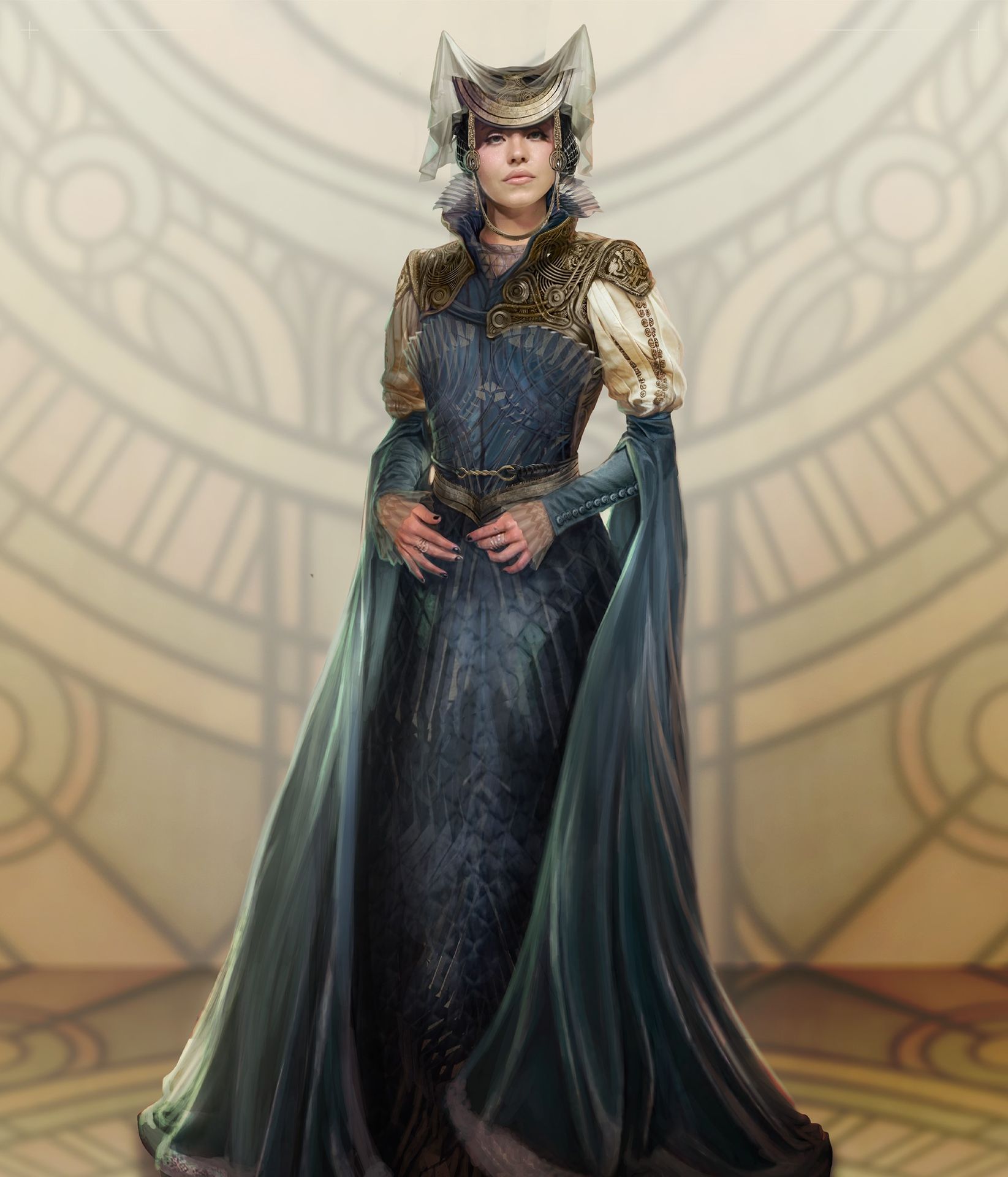
Queen Guinivere is intuitive and ambitious. She is a master in statecraft and enjoys manipulating the courtiers to work in her favour. It’s all a game to her. She weds the young King Arthur and acquires exactly the kind of power she has always wanted; however, the marriage itself leaves her deeply dissatisfied. She desires more.
Lancelot, Knight of the Realm
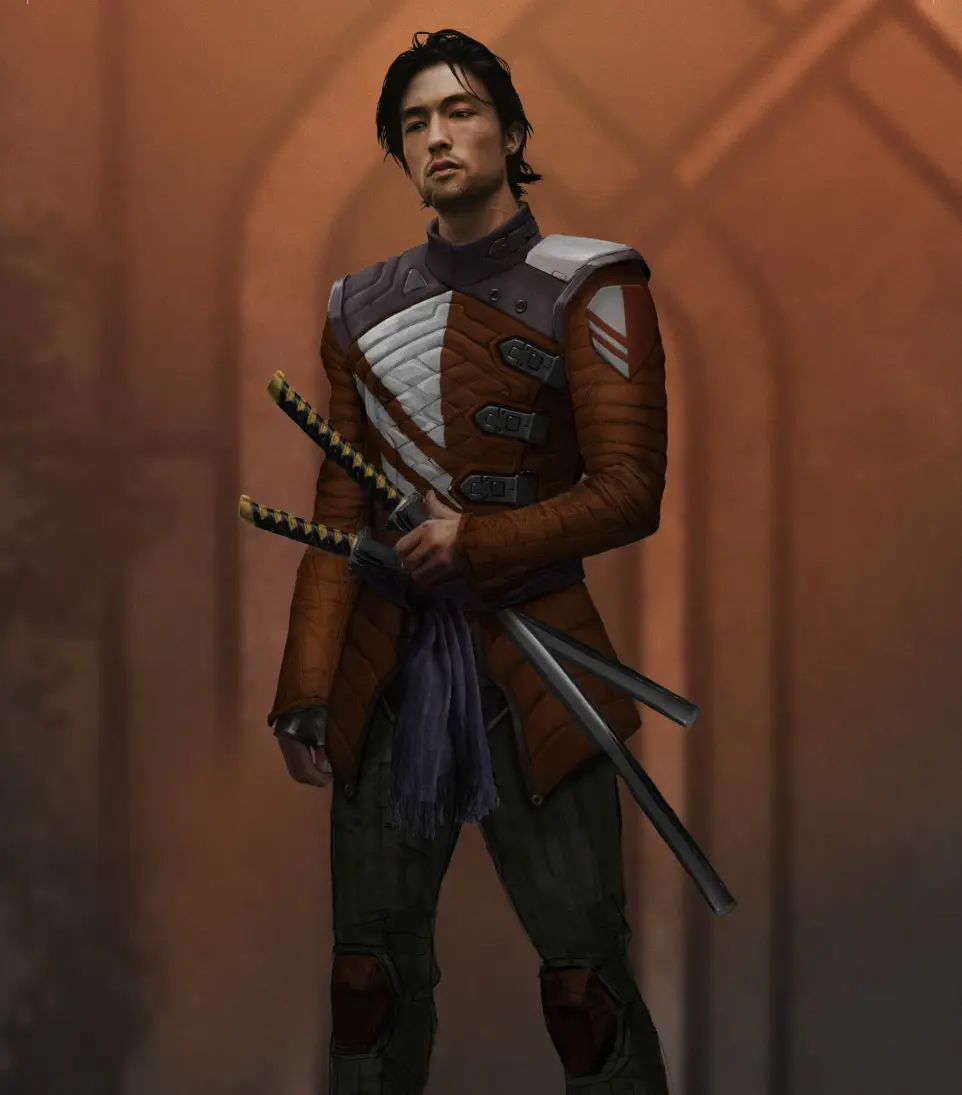
Abandoned at birth, Lancelot was adopted by the family of a young girl named Nimue. The youngest squire to win in a solo battle against a chimera, Lancelot quickly rose to become the most formidable knight in kingdom. He does not fear magery as Arthur does, and when he meets Morgan at court, he becomes someone she can trust.
Morgan le Fey
Morgan is a young noblewoman with an uncommon gift: she understands the ancient technology that was once prevalent on Earth, and she can bring it back to life. But only mages, highly trained and appointed by the court, are permitted to wield artefacts that use the ‘life power’ — what we know as electricity.
As a child, Morgan is sent away to a convent by her mother, the queen consort. It is there that she meets the greatest mage, Merlin, and secretly becomes his dedicated student — eventually surpassing her master.
But Morgan’s fate would catch up with her. Upon the coronation of King Arthur (her half-brother), she is required to assume an official court role, lady-in-waiting to Queen Guinevere.
Merlin
Merlin is the greatest of all mages. Once the Lord Protector of the Realm, Merlin has now reclused himself from royal affairs to seek the true power of the Fey (a dormant artificial intelligence) — a life power so great that it could resurrect the ancients. An old foretelling speaks of an emissary that will open the gateway to Avalon, a place ruled by the Fey where humanity knows no suffering or death and can live forever in peace.
Merlin is a charismatic man who is highly persuasive and socially adept, though feels little empathy. He grew up during a turbulent time of plague and famine in the kingdom.
Most believe that the Fey have chosen Merlin to be their envoy, but upon meeting Morgan he begrudgingly discovers that this is not his prophesy to fulfil.
Arthur, King of Tor
Arthur has been primed for the throne from the day he was born. He excels in the physical arts: riding, swordplay and jousting. He values friendship, loyalty and fairness. His closest confidante is Lancelot. Growing up with his half-sister, Morgan, whose inclination for magery was always admonished, Arthur developed a deep mistrust and fear of the power.
Queen Guinivere
Queen Guinivere is intuitive and ambitious. She is a master in statecraft and enjoys manipulating the courtiers to work in her favour. It’s all a game to her. She weds the young King Arthur and acquires exactly the kind of power she has always wanted; however, the marriage itself leaves her deeply dissatisfied. She desires more.
Lancelot, Knight of the Realm
Abandoned at birth, Lancelot was adopted by the family of a young girl named Nimue. The youngest squire to win in a solo battle against a chimera, Lancelot quickly rose to become the most formidable knight in kingdom. He does not fear magery as Arthur does, and when he meets Morgan at court, he becomes someone she can trust.
Nimue of the Lake
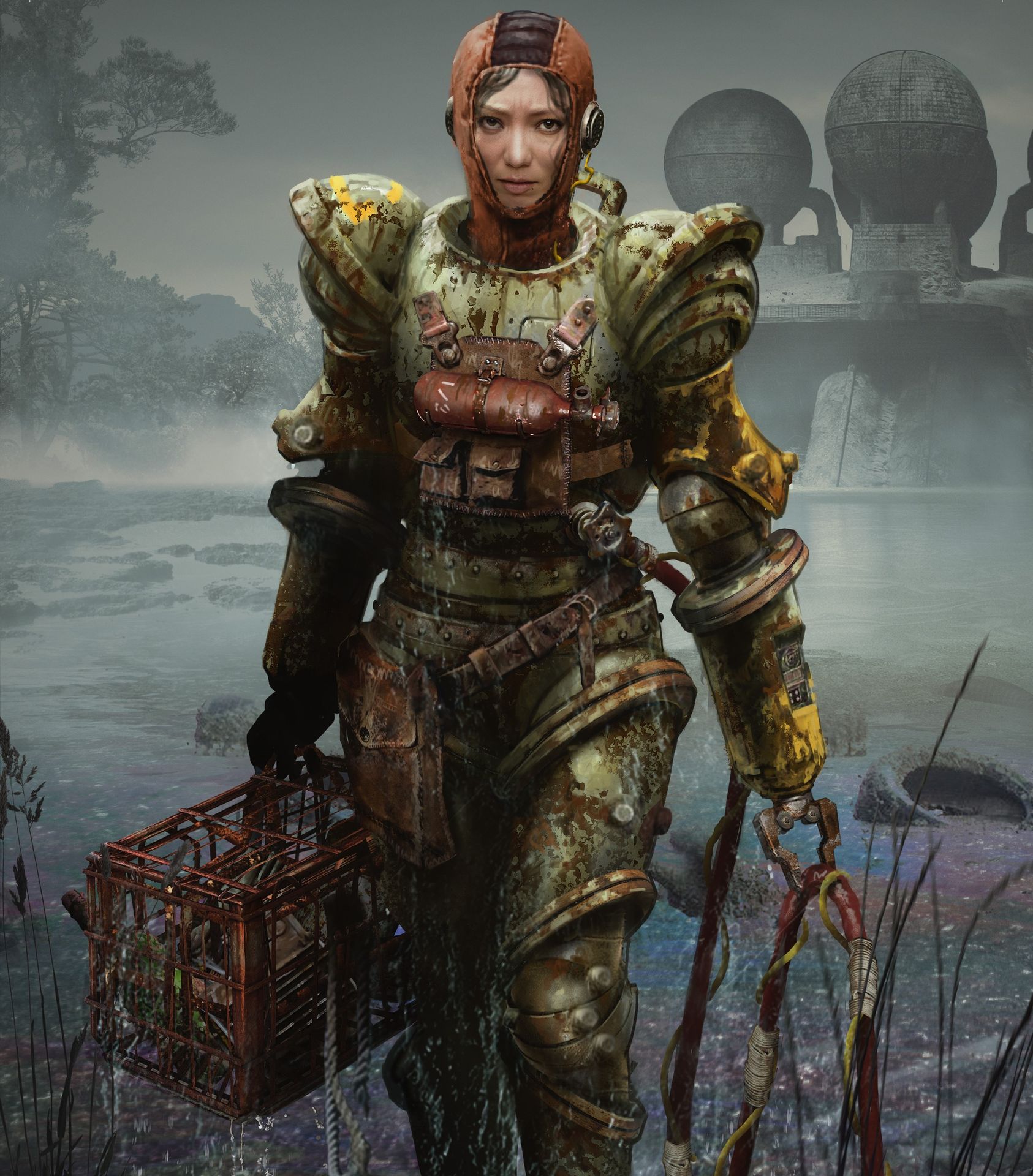
Nimue is an apprentice court mage and master salvager. She discovered a bay of power suits in the abandoned research base near her home, where she keeps her treasured old tech hidden. Nimue’s expeditions take her far beyond the perimeter of the kingdom; she knows the perils of the landscape well.
Nimue of the Lake
Nimue is an apprentice court mage and master salvager. She
discovered a bay of power suits in the abandoned research base near her home, where she keeps her treasured old tech hidden. Nimue’s expeditions take her far
beyond the perimeter of the kingdom; she knows the perils of the landscape
well.
Related projects
The Lord of the Rings: The War of the Rohirrim
Film and television • Design • Creatures • Weapons • World-building • Environments • Cinematic keyframes
Avatar: The Way of Water
Film and television • Design • Manufacture • Costumes • Creatures • Characters • Props • Weapons • Vehicles • Miniatures • World-building
Kingdom of the Planet of the Apes
Related projects
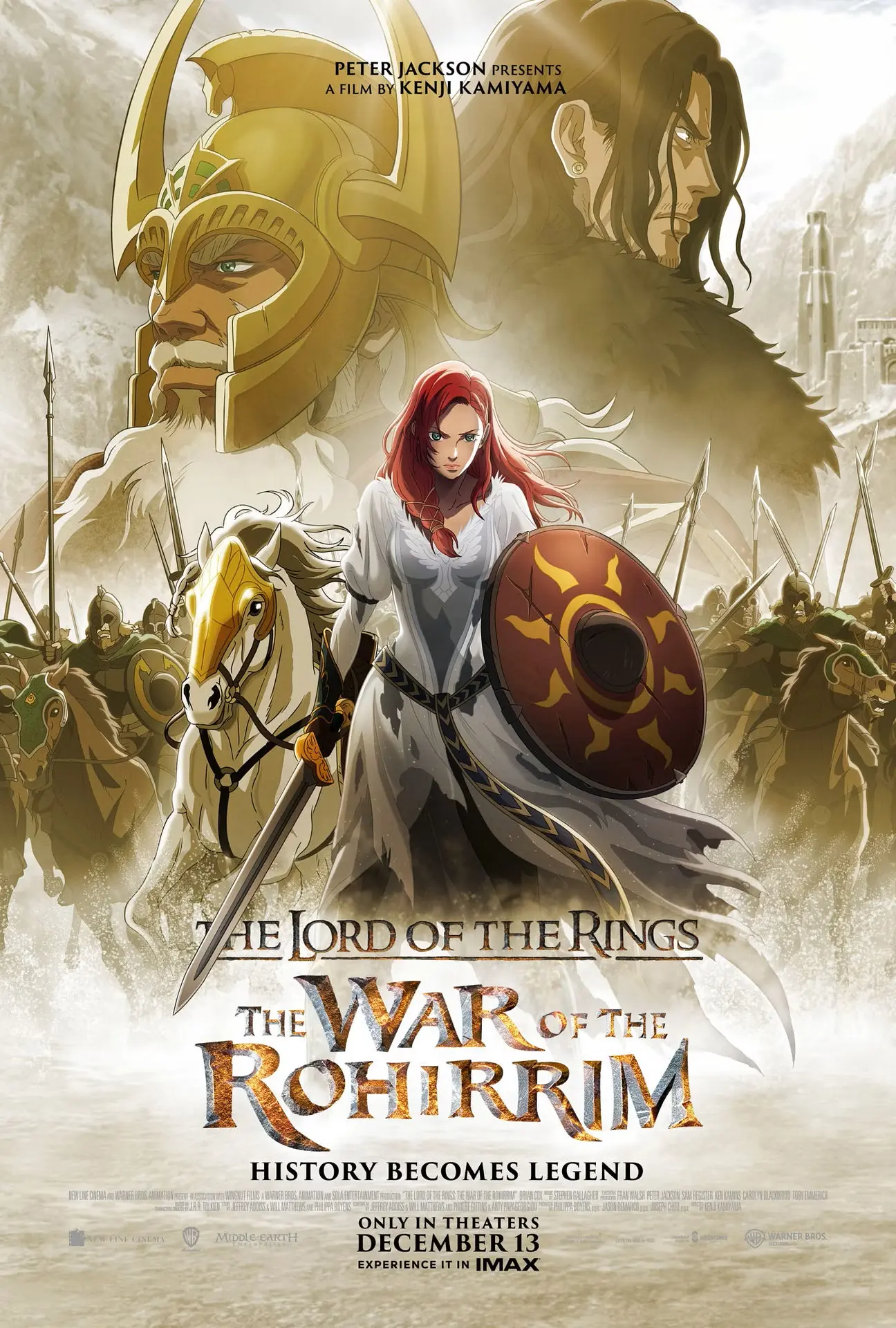
The Lord of the Rings: The War of the Rohirrim
Film and television • Design • Creatures • Weapons • World-building • Environments • Cinematic keyframes
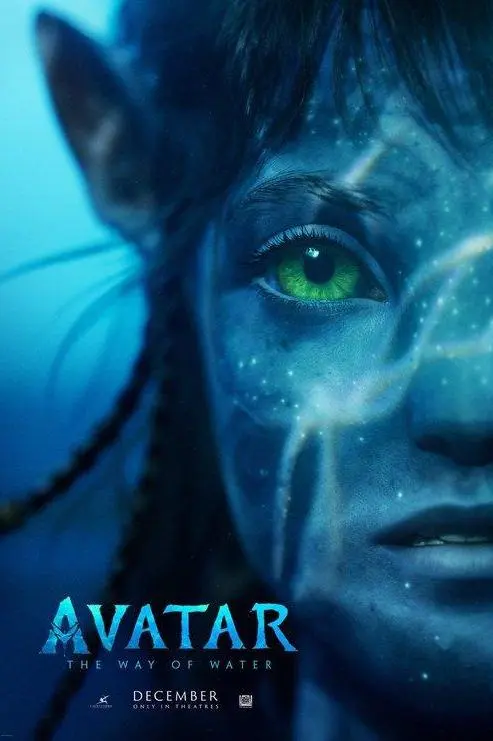
Avatar: The Way of Water
Film and television • Design • Manufacture • Costumes • Creatures • Characters • Props • Weapons • Vehicles • Miniatures • World-building